Welcome to the MRC Academy demonstration environment. This site is currently a preview portal for DOE institutional pilot partners. Public Phase 1 catalog launch is planned for Q4 2026.

⸻ INTERACTIVE PREVIEW · LAUNCHING 2026

EVMS training built for DOE national laboratory project environments.

On-demand, role-specific modules designed by consultants with deep DOE national laboratory project controls experience. Pilot the curriculum with your laboratory before full deployment.

 DOE-native curriculum        Practitioner-authored       Self-paced ∙ web-accessible 
Write your awesome label here.

 BUILT FROM DEEP DOE LABORATORY EXPERIENCE 

MRC consultants have supported EVMS, project controls, and project management work across DOE national laboratory environments including SLAC, Berkeley Lab, Argonne, Oak Ridge, Brookhaven, Fermilab, Princeton Plasma Physics Laboratory, and Jefferson Lab. 

SLAC    Berkeley Lab    Argonne    Oak Ridge    Brookhaven    Fermilab  Princeton Plasma Physics    Jefferson Lab

THE PROBLEM WE BUILT THIS FOR

EVMS training built for the way DOE national laboratory projects actually operate.

Designed to reinforce — not replace — the governance framework established by each site's EVMS System Description.

Most EVMS training is designed for the broadest possible audience — which means generic case studies, multi-day workshops that pull CAMs away from technical work, and examples that don't map to your site's System Description. The result is workforce development that may check the training box without fully preparing practitioners for the decisions, documentation, and coordination expected in a laboratory EVMS environment. 

MRC Academy is different. Modules are developed from real DOE laboratory project controls experience, use laboratory-relevant case scenarios, and are designed to reinforce — not replace — the governance framework established by each site's EVMS System Description. 

PROGRAM STRUCTURE

A curriculum that respects how DOE national laboratory teams actually learn

Three tiers. Modular. On-demand. Consumable during normal workflow — not in three-day blocks.
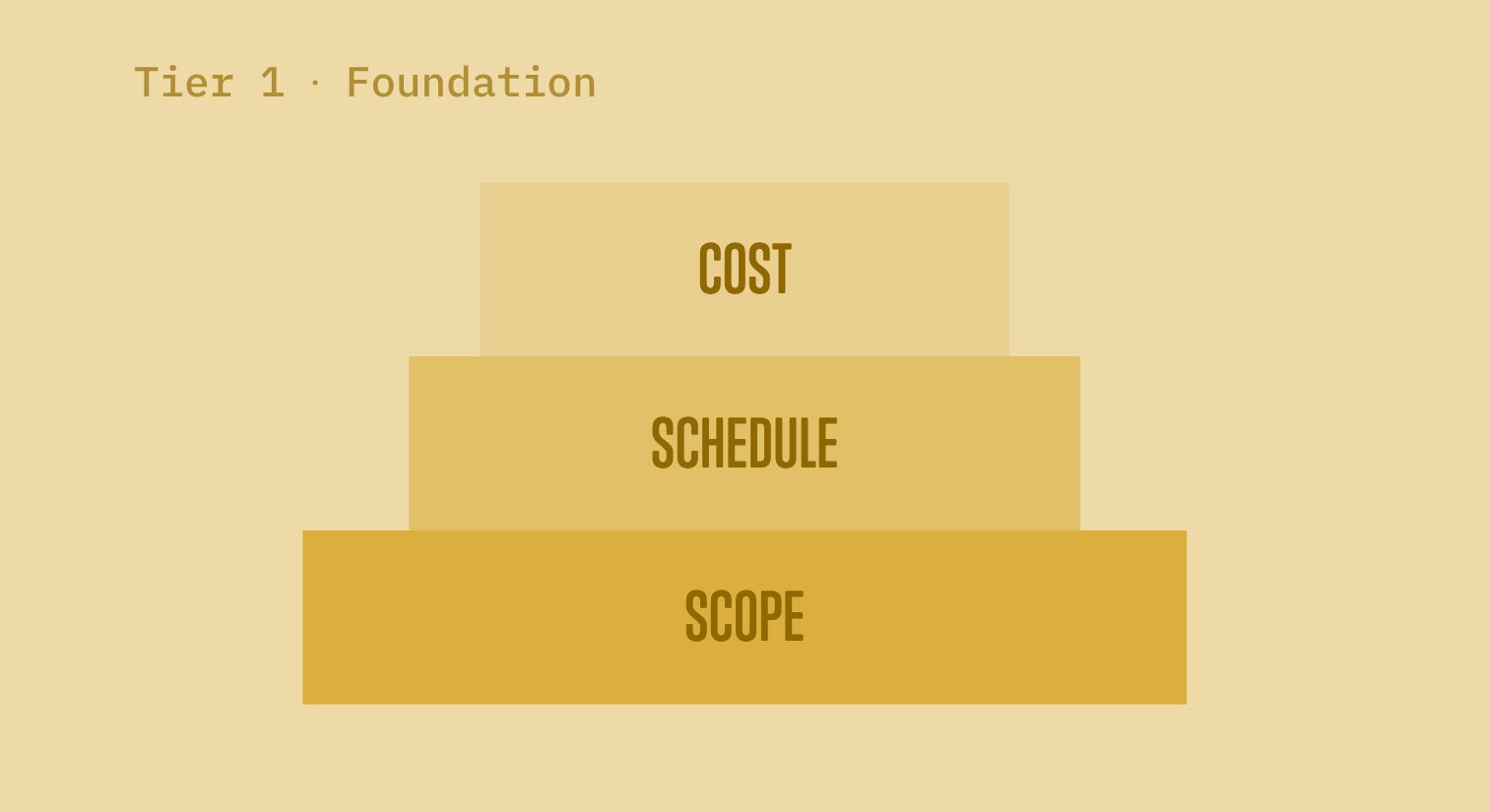
TIER 1

Foundational Practice

~6—9 hours total · Core planning, baseline development, performance measurement
For new Control Account Managers, Project Managers, and technical staff transitioning into project roles. Builds a value-added project management foundation — consistent with foundational project management practices used across federal project environments — before introducing full EVMS rigor.
For: New CAMs · PMs · Technical staff

TIER 2

Compliance Application

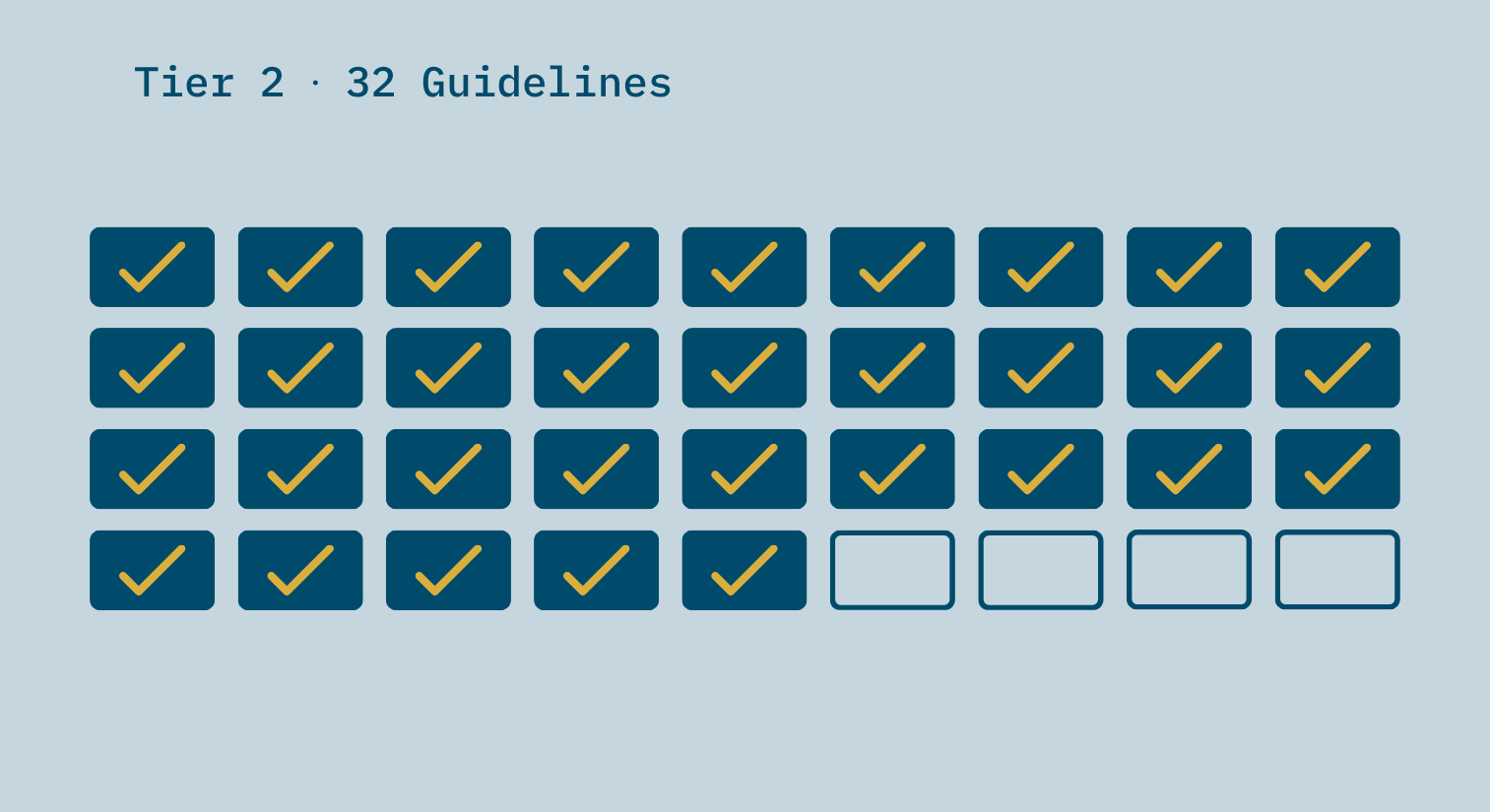
~6—9 hours total · EIA-748-aligned requirements, variance analysis, CAM readiness
For CAMs, PMs, and EVMS coordinators. Builds on Tier 1 with the documentation, traceability, and disciplined controls required for a compliant, auditable EVMS. 
For: Active CAMs · Coordinators · PMs

ADVANCED

Advanced Application Workshops

Deep-dive workshops for experienced practitioners —
coming in a later phase
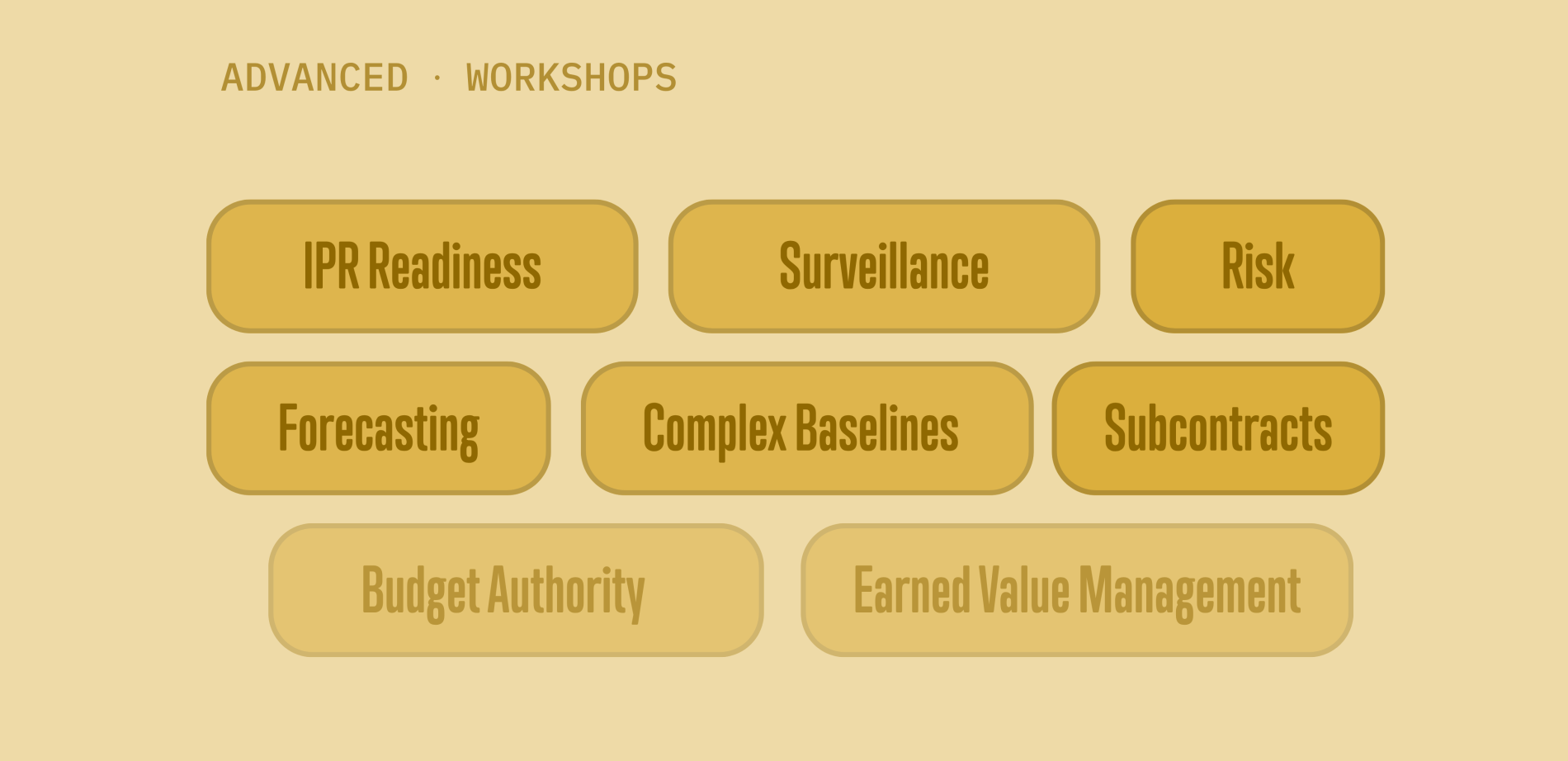
Scenario-driven workshops designed to extend practitioner capability into the most complex EVMS challenges. Workshop topics are being scoped against pilot partner needs and will be announced as the curriculum is finalized. 
For: Experienced practitioners

PHASE 1 BUNDLE & ENGAGEMENT OPTIONS

Take what you need. Or take the full pathway.

MRC Academy is being built around three curated pathways — each designed for a different workforce strategy:

The Phase 1 Bundle — the full MRC-issued certificate pathway. Combines Tier 1 Foundational Practice with Tier 2 Compliance Application into a single integrated learning journey. Learners who complete the Bundle and meet assessment requirements earn an MRC-issued EVMS Practitioner Certificate. Planned for Q4 2026.

The CAM/PM Pathway — role-curated for Control Account Managers and Project Managers. Draws from across the Application and Governance Series with role-specific emphasis. Module composition is being scoped against pilot partner needs.

The PCA/Scheduler Pathway — role-curated for Project Controls Analysts and Schedulers. Emphasizes planning, scheduling, analysis, and reporting skills. Module composition is being scoped against pilot partner needs.

Modules can also be taken individually for targeted capability building, and full catalog access can be configured for laboratory-wide deployment. Pilot partners help shape each pathway and engagement option.

These pathways scale with experience. Newer staff build from the foundational L1 tier, practitioners deepen application skill at L2, and seasoned CAMs, PMs, and analysts enter through the role-curated paths — with advanced scenario-based workshops (forthcoming) extending the program for the most complex EVMS challenges.

▸ Bundle availability planned for Q4 2026. Pilot partners receive early access to structure and assessment criteria.

T1

Tier 1 · Foundational Practice

~6—9 hours total · Value-Added Practice

T2

Tier 2 · Compliance Application

~6—9 hours total · EIA-748 rigor & audit-ready


Individual Application

~60—90 minutes each · Module levels

MRC-issued EVMS Practitioner Certificate

Phase 1 Bundle: ~12–18 hours total

STRATEGIC OUTCOMES · INSTITUTIONAL VALUE 

Outcomes MRC Academy is designed to support.

Four ways MRC Academy supports institutional EVMS capability.

01

Enhanced Surveillance Readiness

Teams that understand EVMS principles — not just procedures — are better positioned to apply requirements consistently. The expected benefit is clearer documentation, stronger variance narratives, better-prepared CAMs and PMs, and improved readiness for internal surveillance, external reviews, and corrective-action follow-through.

02

Operational Efficiency

When CAMs and PMs understand what right looks like, project controls staff can spend less time correcting data quality issues and more time on analysis. The expected result is more credible forecasts, stronger analysis, and better-informed program decisions.

03

Workforce Development 

A structured technical staff → CAM → PM → advanced practitioner pathway gives your team something to advance toward. In specialized project controls roles, visible development pathways can support retention, succession planning, and long-term capability building.

04

Reduced Reliance on Live Training Events 

On-demand access can reduce reliance on repeated live workshop scheduling, travel logistics, and one-time training events. New hires onboard without a site visit, and refresher content evolves as standards and guidance change.

ACCREDITATION ROADMAP 

PMI ATP and AACE AEP Roadmap — Targeting 2027.
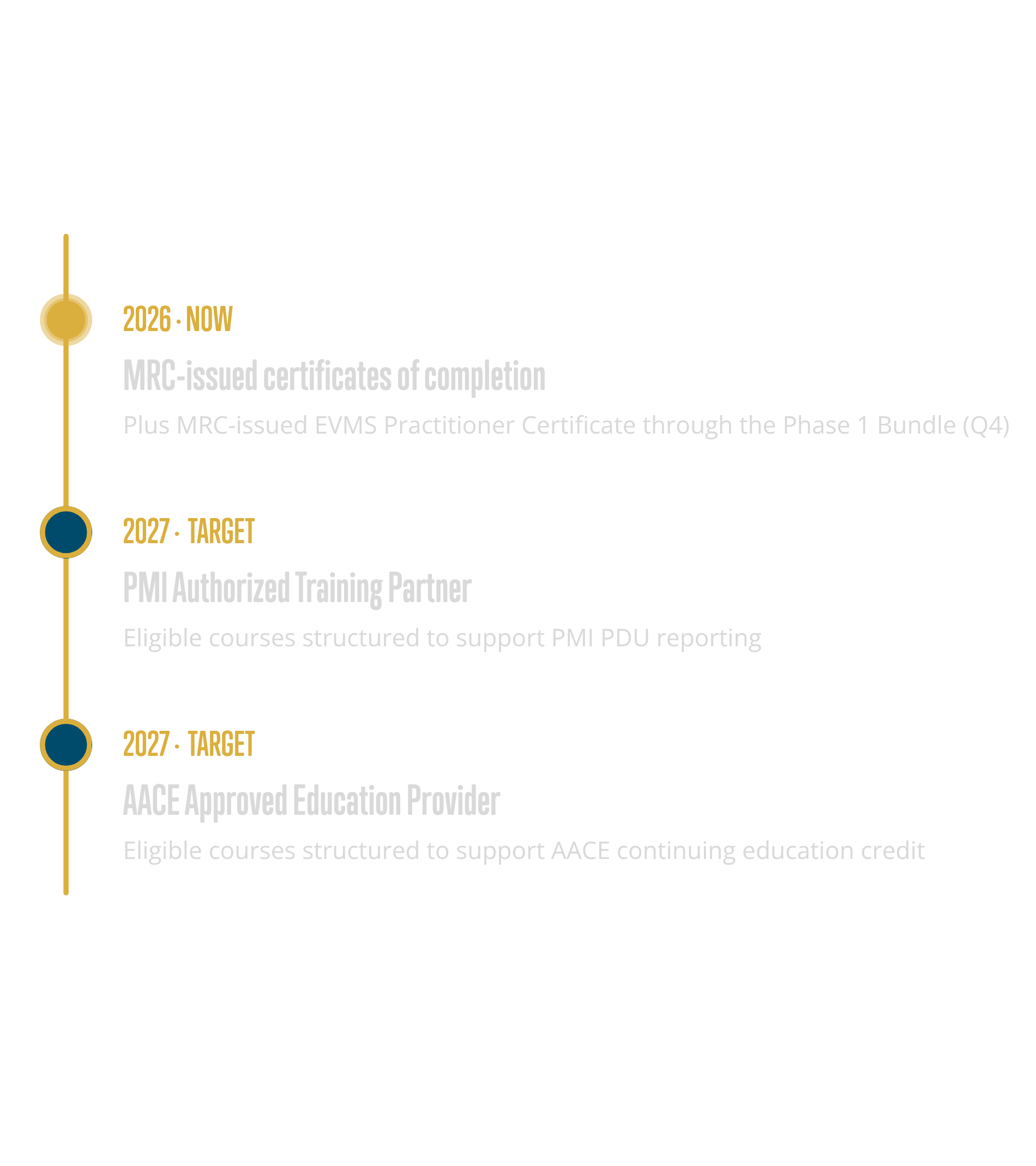
MRC Academy is pursuing recognition as a Project Management Institute Authorized Training Partner and an AACE International Approved Education Provider. These efforts are part of our accreditation roadmap, with a target timeline of 2027. 

If approved, eligible courses will be structured to support PMI PDU reporting and AACE continuing education credit / CEUs where applicable, subject to PMI and AACE requirements. Until then, learners earn MRC-issued certificates of completion and, where applicable, an MRC-issued EVMS Practitioner Certificate through the Phase 1 Bundle.

FOR PRACTITIONERS 

COURSE CATALOG PREVIEW

Browse the Curriculum

Every module is self-paced, web-accessible, and designed to be completed inside normal workflow. All Phase 1 modules are planned for Q4 2026. Join the waitlist to be notified as each goes live.

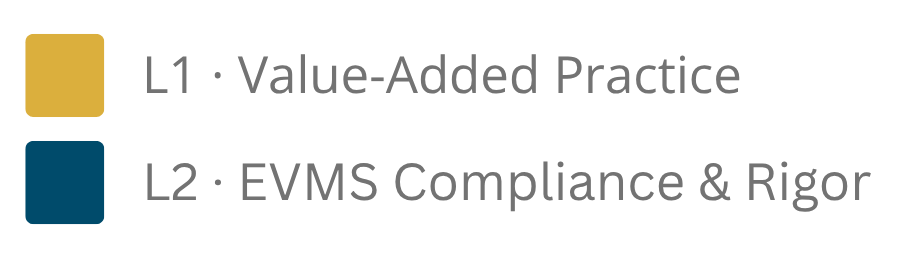
Across the Application Series, each module is offered in two levels: L1 supports Tier 1 Foundational Practice, and L2 supports Tier 2 Compliance Application.

Application Series

Two levels per module — L1 (Value-Added Practice) builds the foundation; L2 (EVMS Compliance & Rigor) adds the audit-ready discipline

Organizing & Scheduling

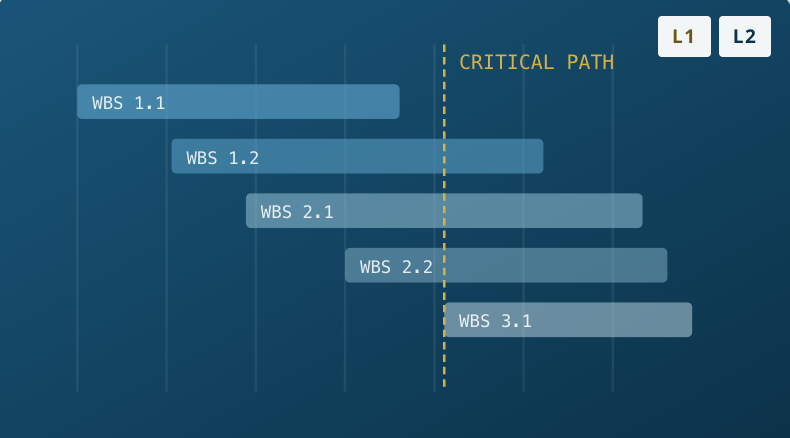
WBS / OBS, IMS logic, Critical Path, rolling wave planning.

Cost Estimating, Budgeting & Accounting

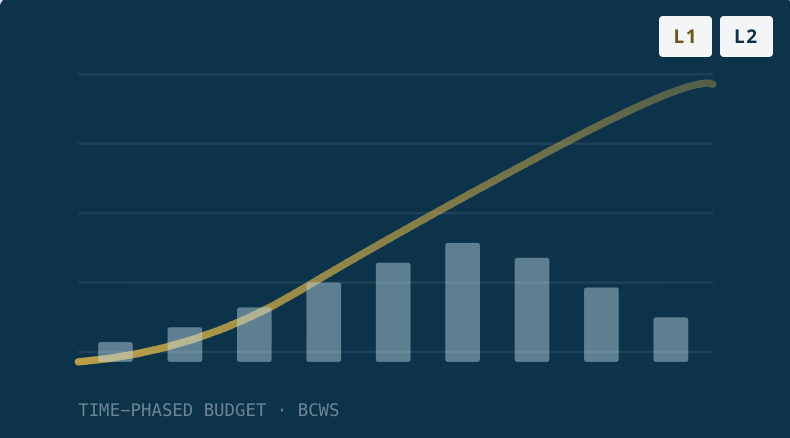
Basis of Estimate, EVT selection, time-phased budgets, Work Authorization Documents.

Analysis, Reporting & VAR Writing

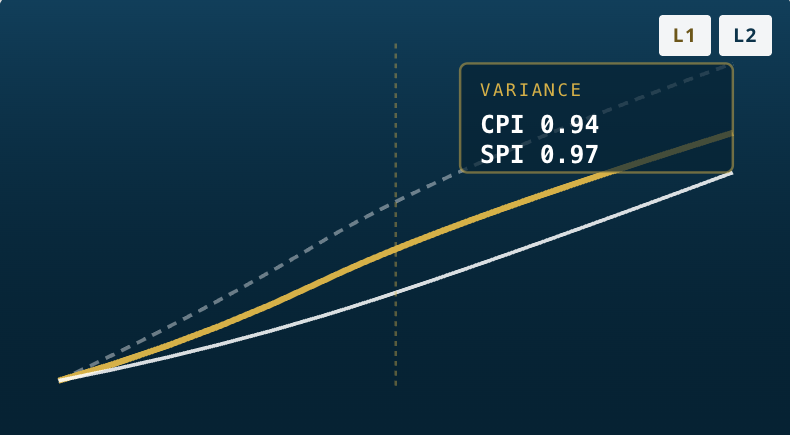
CV / SV / CPI / SPI, root cause analysis, compliant Variance Analysis Reports.

Change Management

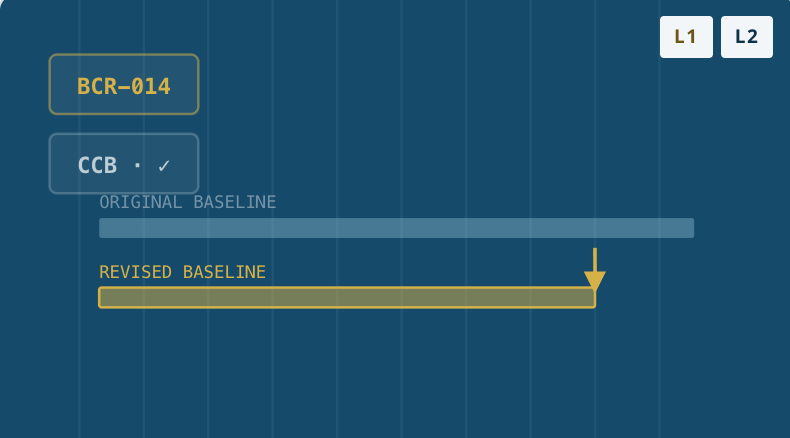
Baseline Change Requests, Change Control Board process, baseline maintenance discipline.

Subcontract & Material Management

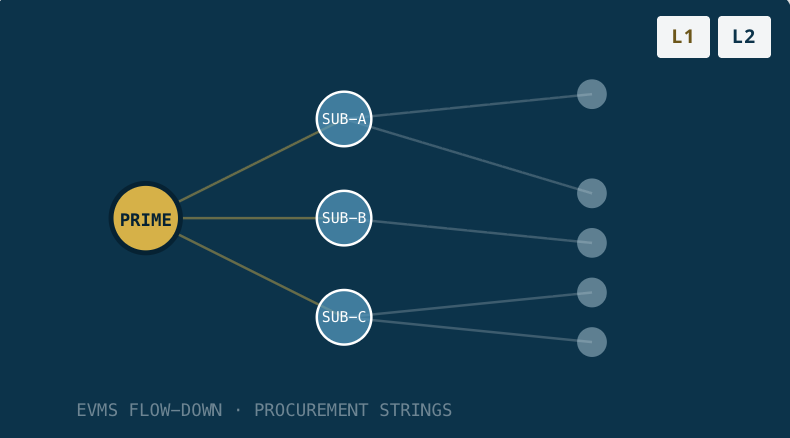
EVMS flow-down, procurement strings, material traceability.

Annual Refresher

Keeping experienced practitioners current as guidance and standards evolve.

Governance Series

Single-level conceptual modules. The "why and what" behind the system you operate inside. 

EVMS Fundamentals & EIA-748

The EIA-748 guideline framework, the system of record, the
non-negotiables

Navigating Delegated Authority

Responsible tailoring for DOE delegated projects.

The High-Maturity Environment

Beyond compliance: Culture, People, Practices, Resources (IP2M/CAG 2.0).

Global & Commercial Standards

ISO 21508, PMI, and AACE perspectives on EVM.

Advanced Application Workshops 

Coming in a later phase
A series of scenario-driven workshops for experienced practitioners facing the most complex EVMS challenges. Workshop curriculum is currently being mapped against pilot partner needs and will be announced as topics are finalized.

Be notified as modules launch through 2026. No cost. No commitment.

HOW DEPLOYMENT ACTUALLY WORKS

Start with a focused pilot. Scale after fit is proven.
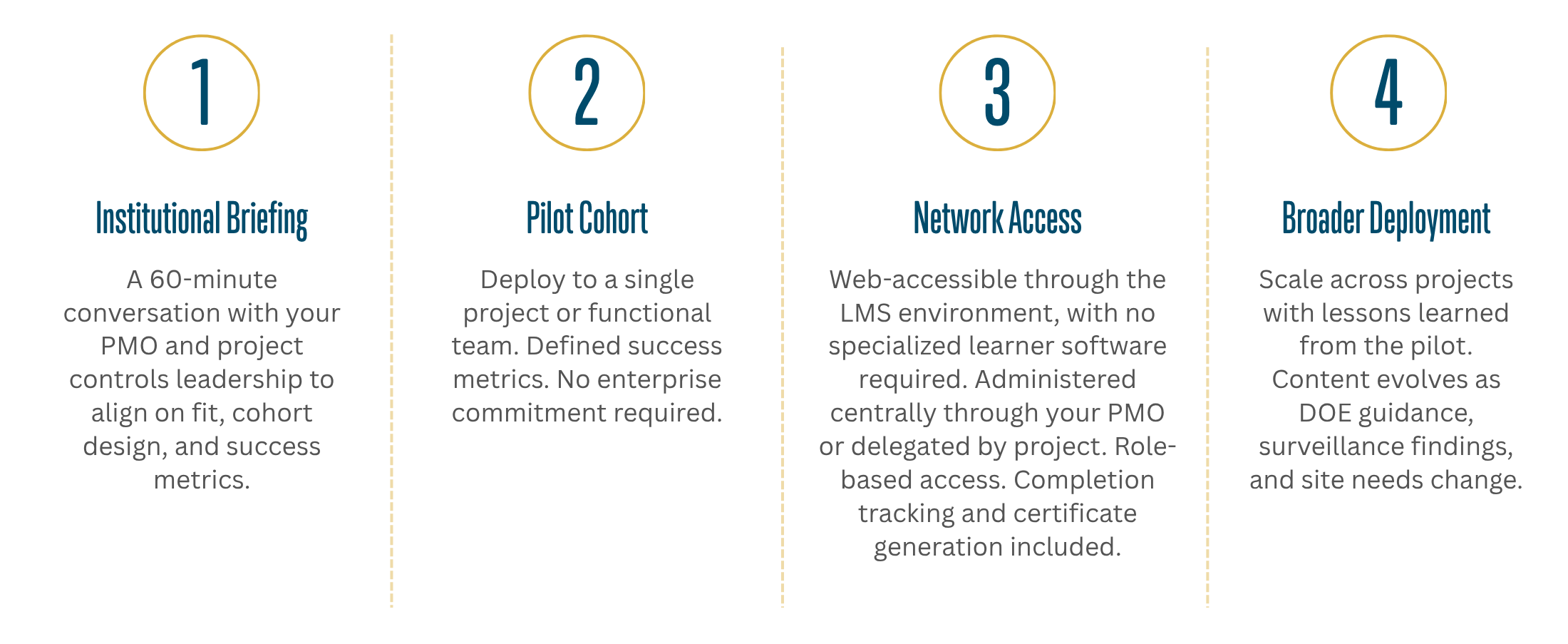
MRC Academy is built to fit DOE national laboratory IT and procurement realities.

BUILT BY DOE EVMS PRACTITIONERS

This wasn't adapted from a commercial course.
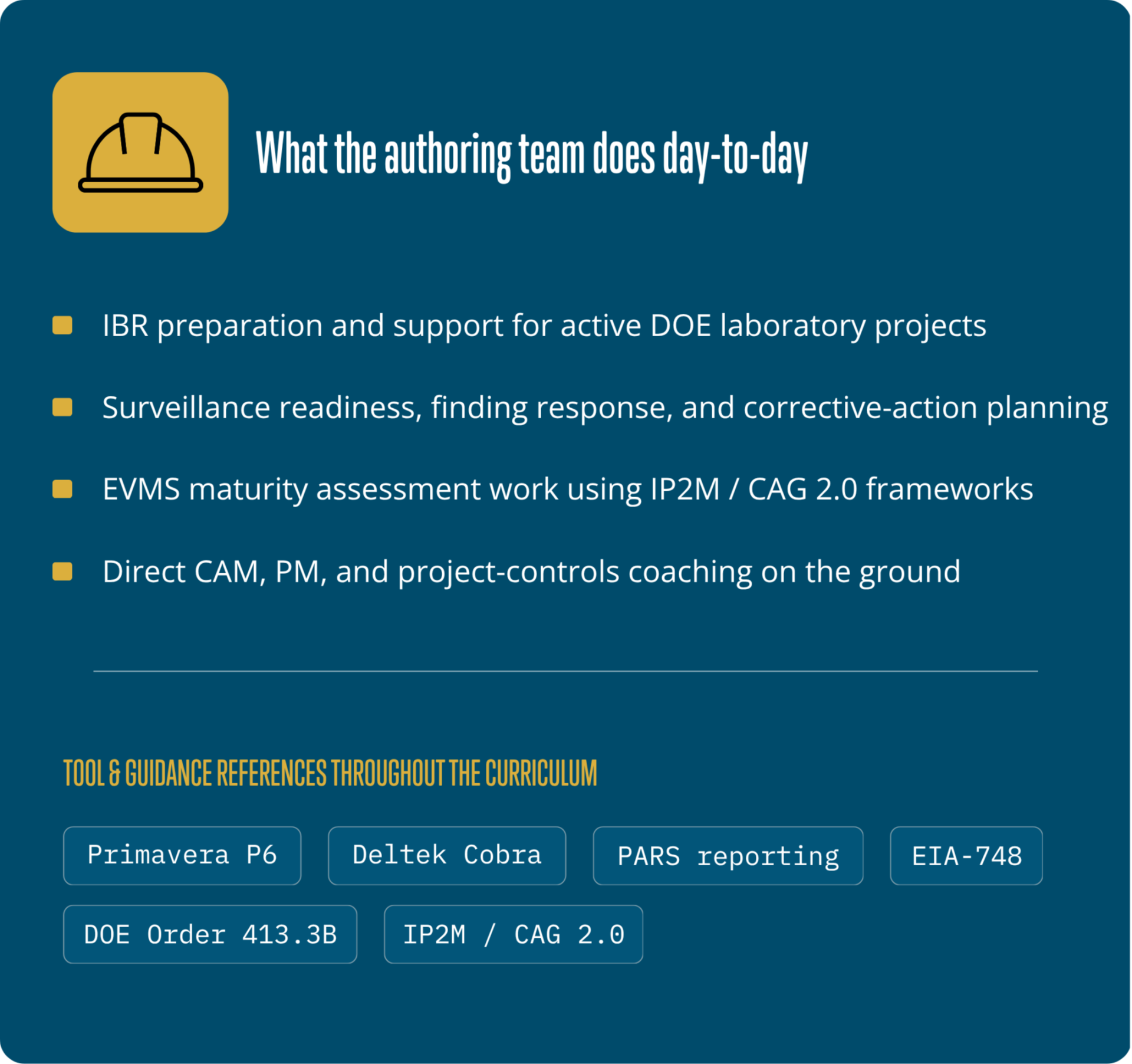
MRC Academy is developed by consultants with 20+ years of practical EVMS experience across DOE Office of Science and national laboratory project environments subject to formal project controls and EVMS expectations. The curriculum is developed with direct input from consultants who support IBR preparation, surveillance readiness, corrective-action planning, and maturity assessment work at national laboratories.

That's why the case scenarios reflect DOE national laboratory program environments, technical work structures, and project controls realities. That's why the terminology reflects DOE Order 413.3B and the realities of your site's System Description. That's why the tool references reflect common DOE laboratory environments, including P6, Cobra, and PARS-related reporting contexts. This is training designed to fit your environment because it is built from the realities of DOE laboratory project work.
An MRC Consulting program · Founded 2007 · Small Business

OUR TEAM

Guided by decades of laboratory experience.

MRC Academy is overseen by Manta Ray Consulting principals Manny Abela and Jeff Chan. With over 50 combined years of hands-on project controls experience, Manny and Jeff built MRC on a simple premise: when you partner with us, you get the expertise of the entire firm. The Academy scales that exact philosophy, putting our team's collective capabilities directly into the hands of your technical staff.

INTERACTIVE PREVIEW · TAKE THE NEXT STEP

Two ways to engage with the demonstration environment.

FOR DOE NATIONAL LABORATORIES

Tour the Demonstration Environment

You are currently viewing our institutional demonstration environment. We are partnering with a limited number of DOE national laboratories to walk through our curriculum architecture and secure Phase 1 pilots. Tour the platform today, and let's discuss how our initial modules can integrate with your site's System Description.

FOR INDIVIDUAL LEARNERS

Be First When Modules Go Live

Phase 1 modules are planned to launch Q4 2026. Join the waitlist to be notified as each becomes available for individual enrollment.
No cost. No commitment.

FREQUENTLY ASKED QUESTIONS

Answers to the questions we hear most.

What is this site? Why does it say "demonstration environment"?

This site is currently a preview portal that allows DOE Lab Directors, PMO Leads, and Procurement teams to walk through MRC Academy's curriculum architecture, sample content, and platform experience ahead of full launch. It supports our Phase 1 pilot conversations. The Public Phase 1 catalog launch is planned for Q4 2026.

When does MRC Academy go public, and when does the Phase 1 Bundle launch? 

Phase 1 content is in active production through 2026. The Phase 1 Bundle — combining Tier 1 and Tier 2 into a single integrated pathway with an MRC-issued EVMS Practitioner Certificate — is planned for Q4 2026 and will be our first public release. After the Bundle launches, additional modules will be added individually as they complete production. Organizations engaging through a pilot arrangement can access content earlier, including live or virtual-hosted courses.

What's the difference between MRC's certificate and PMI / AACE accreditation?

PMI ATP and AACE AEP recognition are part of MRC Academy's accreditation roadmap, with a target timeline of 2027. If approved, eligible courses will be structured to support PMI PDU reporting and AACE continuing education credit / CEUs where applicable, subject to PMI and AACE requirements.

How will I be able to engage with MRC Academy?

MRC Academy is being built around three curated pathways: the Phase 1 Bundle, the CAM/PM Pathway, and the PCA/Scheduler Pathway. Modules can also be taken individually for targeted capability building, and full catalog access can be configured for laboratory-wide deployment. Pilot partners help shape each pathway based on real laboratory workflow needs.

What does it cost?

We are finalizing pricing across the pathways and engagement options. Pilot partners receive tailored terms aligned with their deployment scope. Contact us to discuss your laboratory's needs.

Does the training align with the current EIA-748 standard?

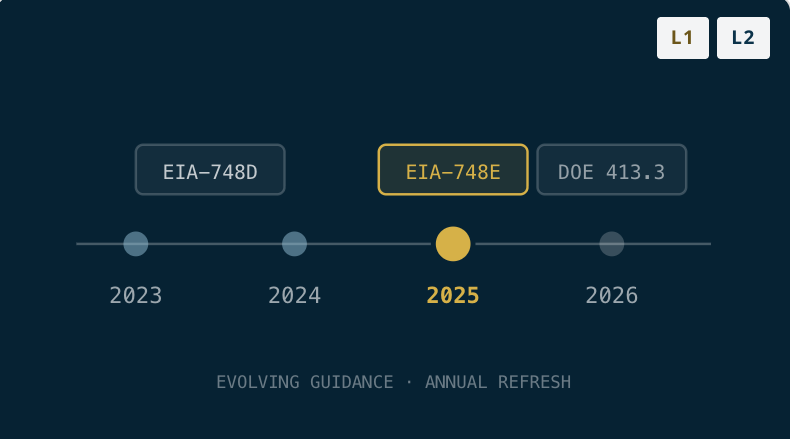
Curriculum content is aligned to the current EIA-748 standard, DOE EVMS guidance, and MRC's understanding of current DOE laboratory implementation practices. Where revisions or guidance changes are pending, refresher content will distinguish between current requirements, emerging changes, and items awaiting agency or contractual adoption. Content will be maintained as standards, DOE guidance, and site implementation expectations evolve.

How does this integrate with our existing EVMS System Description?

Content is structured to reinforce — not replace — your site's governance. We emphasize consistency with your System Description and use examples that reflect common DOE laboratory project-controls tools and reporting environments, including P6, Cobra, and PARS-related workflows.